
Accounts Payable and Accounts Receivable: What They Are and Why They Matter
Revenue looks fine, invoices are going out, but there’s never quite enough cash when it’s needed. Sound familiar? This is one of the most common situations small business owners find themselves in, and most of the time, it has nothing to do with how well the business is actually doing. It comes down to how accounts payable and receivable support is being managed, and getting that wrong affects everything from payroll and vendor relationships to the decisions you make every day about your business. What Are Accounts Payable and Accounts Receivable? Accounts payable is the money your business owes for goods or services already received. Accounts receivable is the money your customers owe you. They are two sides of the same transaction. To understand these terms, let’s take the example of a small retail business. The store owner buys various products from a supplier but does not pay for them right away; instead, both individuals agree that payment will be made within 30 days. The store receives the products, sells them, and generates revenue, but until the supplier is paid, that outstanding amount is recorded on the books as accounts payable. On the other hand, the supplier that delivered the goods has not yet received payment; that outstanding amount is accounts receivable. It is the money they have already made but have not yet collected. How do Accounts Payable and Accounts Receivable Work Together? Businesses that succeed know how to balance both. If your customers have 30 days to pay you, but you must pay your supplier in 15 days, your money is going out before it comes in. Keeping your accounts receivable terms shorter than your accounts payable terms means you collect from customers before your own payments are due, and that leads to positive cash flow. The Cost of Ignoring AP and AR Mismanaging AP and AR affects the day-to-day processes essential for running your business. A supplier puts you on prepayment terms because your account has been consistently late. You start drawing on a credit line to cover payroll, not because the business is struggling, but because a large amount in receivables is sitting uncollected. You delay a vendor payment, hoping a client pays first, and they do not. The report shows that unpaid invoices leave 56% of US small businesses with an average of $17,500 owed. And according to Kaplan Collection Agency, 55% of all B2B invoiced sales in the US are past due. That is not just a cash flow issue. It is a collection problem that most businesses are not actively managing. According to Monite, 54% of SMEs regularly pay their own bills late — often not because they don’t have the money, but because AR delays mean the cash isn’t available when AP comes due. Without proper accrual accounting, your financial reports will not reflect any of this accurately. A business can look profitable on paper while running out of usable cash underneath. When You Should Get Help? Here are the signs that it is time to get help. Your invoices are aging past 60 days with no follow-up process in place. You have no real visibility into what your cash position will look like 45 days from now. You are making hiring or vendor decisions without knowing if the cash will actually be there. This is often when accounting services for companies can provide the financial clarity and support you need. According to CashinUSA’s 2025 report, 65% of businesses spend roughly 14 hours per week chasing overdue invoices. That is time that should be going into running the business, not managing unpaid bills. How Seafarer Can Help If you’re making financial decisions without a clear view of your cash position, it’s time to take control. At Seafarer Consulting, we help businesses manage accounts payable and receivable. We promptly follow up overdue invoices, keep supplier payments on schedule, and avoid costly late fees. Don’t wait until cash flow issues disrupt your business. Book your free consultation today to review your AP and AR processes and identify practical ways to improve cash flow.
What a Fractional CFO Actually Does in the First 90 Days
There’s a common misconception about what hiring a Fractional CFO actually means. Many business owners imagine high-level strategy sessions and sweeping financial decisions from day one. In reality, the process is different and can be even more valuable. During the first 90 days, the main goal is to build a solid financial foundation. Before making plans, a Fractional CFO needs to understand the business’s current situation. They need to look at the numbers, find where the gaps are, and get systems in place to help guide the decisions down the road. Here’s what that process actually looks like, phase by phase. Days 1–30: Getting a Clear Picture The first month is about assessment. A Fractional CFO’s job in this phase is to get an honest, neutral look of the business that includes analyzing financial statements, figuring out where the cash is going, and seeing what’s working and what isn’t. This is also when the books get cleaned up. If things aren’t being reconciled or the reporting is inconsistent, that gets flagged immediately. It’s impossible to make good predictions if the data is a mess, so fixing the books is almost always the first item on the list. Along with the financial review, a good fractional CFO will ask a lot of questions. What are the actual business goals? Which decisions feel the hardest right now? Where do you feel the most exposed? These answers, along with the right FP&A services, are basically the roadmap for everything else. Days 31–60: Building the Systems Once the CFO examines all the key details, you can then move to building the financial infrastructure that allows you to make better financial decisions everyday. Cash flow forecasting is usually one of the big priorities here. Most small businesses don’t have a reliable way to see where their cash will be in 60 or 90 days. A CFO builds that visibility. Instead of just reacting when cash gets tight, the business can see it coming and actually manage it. Budgeting is the next step. If the business is flying blind or using a budget that hasn’t been touched in months, this is when a real one gets built. A budget isn’t just a document; it’s an accountability tool that warns you when things are heading off track. KPI tracking is another key outcome in this phase. Revenue doesn’t tell the whole story. Depending on the industry, the metrics that actually matter might be gross margins, what it costs to get a new customer, or how long it takes for invoices to get paid. A CFO figures out which numbers are the ones to watch and sets up a way to track them consistently. Financial modeling is the last step of this phase. Financial modeling is the last part of this phase. Whether you’re thinking about a new hire, changing your prices, or expanding, a model lets you test those ideas before you commit to them. Most small businesses just don’t have the internal capacity to do this kind of analysis on their own. Days 61–90: From Insight to Action By month three, the foundation is in place. The goal of the Fractional CFO is to use the systems that were built earlier to translate data into decisions. If the first month showed a gap in cash flow, this is when the plan to fix it gets put into motion. If the analysis showed a service that isn’t performing well or a way to get better margins, those changes happen now. Strategy sessions start looking further ahead—thinking about expanding, new services, or pricing shifts. This is also when reporting becomes a routine. Instead of scrambling for numbers before a big meeting, the business has a clean monthly financial package that tells the story clearly. By day 90, the business owner finally understands the numbers and trusts the data. Most importantly, they have a clear plan they can actually act on. Is a Fractional CFO Right for Your Business? If you’re making high-stakes business decisions without clear, reliable financial data, it’s time for stronger financial leadership. Seafarer Consulting’s Fractional CFO services provide the strategic insight, forecasting, and financial oversight your business needs without the cost or commitment of a full-time CFO. Every engagement is tailored to your goals, challenges, and stage of growth. Book a call with Seafarer Consulting today to discuss your financial priorities and learn how a Fractional CFO can help you make smarter decisions, improve profitability, and build a sustainable plan for growth.
Why Many Small Businesses Start Outsourcing Their Accounting in March
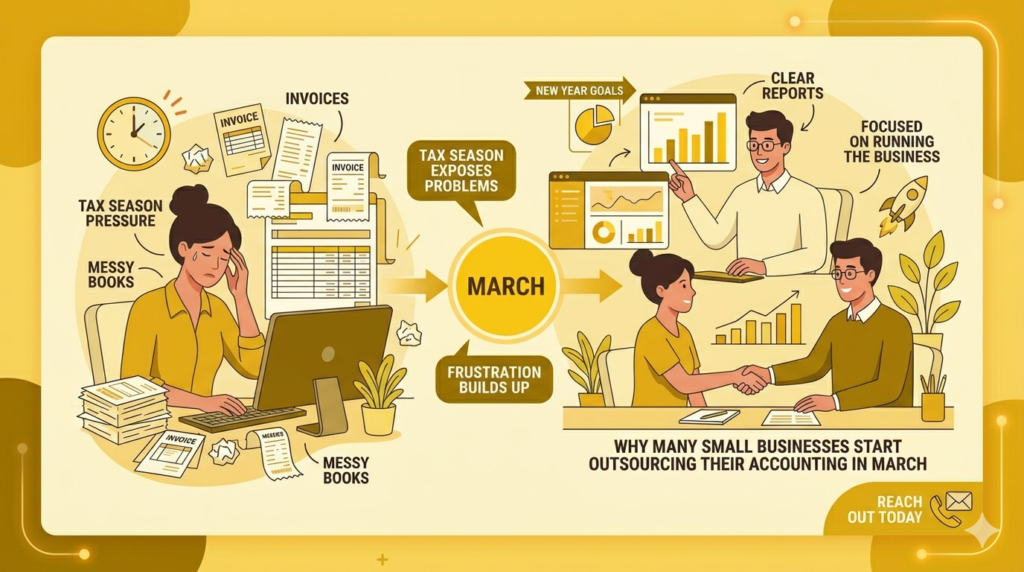
For many small business owners, the decision to outsource accounting does not happen by chance. It tends to build up over time, and for many, March is when everything finally clicks. It is usually a mix of tax-season pressure, a growing workload, and the realization that the numbers are not as clear as they should be. 1. Tax season exposes the problems By March, most business owners are already deep into tax prep. This is usually when issues show up. Books are messy, transactions are unclear, or numbers do not match. What felt “good enough” all year suddenly is not. 2. New year goals start to feel real January is all about planning. February still feels early. But by March, people start asking real questions. Are we actually making money? Can we afford to grow? If the numbers are not clear, those questions are hard to answer. 3. Time gets tighter Business picks up after the holidays. Owners get busy again, and accounting keeps getting pushed aside. What used to be manageable becomes something they avoid. 4. DIY accounting stops working A lot of small business owners try to do their own books at first. Spreadsheets and basic tools can work early on, but as things grow, it gets more complicated. More transactions, more moving parts. By March, many realize they cannot keep up. 5. Frustration builds up Tax season stress, messy records, and unclear numbers all hit at once. It becomes less about saving money and more about reducing stress. 6. Outsourcing starts to make sense At this point, finance and accounting outsourcing feels like a relief. Instead of guessing, they get clear reports and someone handling the details. It frees them up to focus on running the business. 7. It is the right time to fix things March is still early in the year. Cleaning up books now means the rest of the year can be based on accurate data. Waiting until year-end usually just repeats the same problems. At the end of the day, March is when everything clicks. Tax season highlights the issues, goals create pressure, and workload makes it clear that something needs to change. If bookkeeping and cash flow are starting to feel overwhelming, now is the time to get support—not after the pressure builds. We help small businesses keep their books accurate, stay on top of monthly accounting, and clearly understand where their cash is going. With reliable financial information, you can make confident decisions, plan ahead, and spend less time worrying about the numbers. Book a free call today to discuss your current bookkeeping needs and see how we can help you get organized before the year slips away.
The Q1 Financial Checkup Every Small Business Should Do

Three months in, you have real data — not projections, not hope. Here’s how to use it. A client came to us last April convinced their business was doing fine. Revenue “seemed okay,” expenses felt normal, and they hadn’t looked at the books since January. By the time we pulled everything together, they’d missed a window to catch a cash shortfall early, one that a simple Q1 review would have flagged in February. This is more common than most business owners realize. The first quarter ends quietly, and most people are too busy running the business to stop and look at how it’s actually doing. But that first look, when you’ve got three full months of real numbers, is one of the most valuable financial moments of the year. Here are the five areas worth reviewing right now: 1. Revenue: Is the year actually starting the way you planned? Pull your Q1 revenue and put it next to your original forecast. Not to judge yourself — but to understand what’s true. Is revenue tracking ahead, behind, or roughly on pace? Are sales growing month over month, or did January outperform and March slow down? If you’re behind, March is the right time to adjust, not June. A small gap in Q1 is manageable. The same gap ignored through Q2 is a problem. 2. Expenses: What’s actually eating into your margin? Expenses have a way of expanding without anyone noticing. The first quarter tends to pile on costs: annual renewals, new hires, early-year vendor price increases. Scan through your spending by category and ask: Does this match what I budgeted? Is anything higher than expected? Common things we spot in Q1 reviews: software subscriptions nobody’s using, marketing spend that quietly doubled, payroll costs higher than projected because of timing. None of these are emergencies on their own, but catching them now gives you 9 months to adjust. 3. Cash Flow: Profit doesn’t pay the bills, cash does A profitable business can still run into serious trouble if cash isn’t moving through fast enough. Look at your current bank balances, what’s outstanding from customers, and any large payments coming up in Q2. If you’re noticing that customers are paying slower than last year, that’s worth addressing now. Tightening up your invoicing process or revisiting payment terms in March has a compounding benefit for the rest of the year. Wait until fall, and you’re just managing symptoms. 4. Your Balance Sheet: The story behind the story Most business owners live in their P&L and barely glance at the balance sheet. That’s understandable, but it means they’re often missing what’s building beneath the surface. Take a few minutes to look at your loan balances, inventory levels, and overall equity. Is your financial position getting stronger or weaker compared to where you were at the start of the year? These numbers give you a clearer picture of the business’s actual health, not just its recent activity. 5. Your Forecast: Update it while it still matters Your January projections were based on assumptions. Now you have data. Use it. Updating your forecast in March, by adjusting for what Q1 actually showed, helps you make better decisions about hiring, spending, and growth for the rest of the year. It also means you’re not operating on stale assumptions when Q3 planning comes around. Why This Is Worth 30 Minutes of Your Time A Q1 financial checkup isn’t about perfect numbers or finding every possible issue. It’s about knowing where your business stands early enough to make informed decisions. Businesses that review their financials regularly—even with a brief quarterly review—can respond faster, plan with more confidence, and avoid unpleasant surprises at year-end. Those that wait until December to review January’s performance often uncover missed opportunities or issues that could have been addressed months earlier. Not sure what your Q1 numbers are telling you? Or are your books not yet ready for a meaningful review? Book a call with our team today. We’ll review where your finances stand, identify what needs attention, and help you create a clearer path for the rest of the year.
Turning Tax Changes Into Opportunities

You may have heard the phrase “Big Beautiful Bill” used to describe large tax reform laws. The name may sound informal, but it has a significant impact. If you know what to look for, this “BBB” can significantly alter your tax situation and typically result in significant financial opportunities. Its main objectives are to increase the amount of money in taxpayers’ hands, promote growth, and simplify the tax system. Keep reading to know how changes like these can affect you and where the savings often show up. 1. Wider Brackets and Lower Tax Rates Lower tax rates are among the most obvious effects of significant tax reform, frequently paired with updated income brackets. Now, this means many individuals would see a lower overall tax bill, especially for middle-income earners. Business owners may also benefit from reduced taxes on profits, with more take-home pay and stronger cash flow. When rates shift, timing starts to matter more. Decisions about bonuses, distributions, and the timing of income recognition can make a real difference. 2. Bigger Deductions for Businesses Large tax bills frequently attempt to encourage investment by increasing the generosity of deductions. This may entail treating startup and operating costs more favorably, raising the deduction limit for small businesses, or writing off technology and equipment earlier. The benefit is straightforward. Businesses can reduce their taxable income in the year they spend the money if they plan ahead. 3. Advantages for specific kinds of business owners Tax reform frequently contains provisions specifically targeted at you if you are the owner of an LLC, S-corp, or partnership. This could have the following benefits: Deductions based on eligible business income A reduced tax burden without altering the structure of your company Better outcomes when profit splits and compensation are carefully planned This is one thing you should pay close attention to. Small adjustments can lead to meaningful savings, while missed rules can limit the benefit. 4. Higher Standard Deductions and Easier Filing One more goal of tax reform is simplification. A lot of taxpayers benefit from higher standard deductions, which reduces the need to itemize. This helps because: Less paperwork and record-keeping Lower preparation costs More predictable tax outcomes each year For many households, this means keeping more cash without having to jump through hoops. 5. Incentives for Hiring and Growth Major tax changes often include credits and relief measures tied to business expansion. These can show up as: Hiring incentives Payroll-related relief Credits for investing or innovating locally These benefits are easy to overlook, but they can add up quickly for companies that are growing or adding staff. 6. Planning Still Makes the Difference A common mistake is assuming tax savings happen automatically. In reality, the biggest wins usually go to those who take time to adjust their approach. That often includes: Reviewing how the business is structured Rethinking how owners are paid Being intentional about when income and expenses hit Aligning tax decisions with long-term goals Without a proactive plan, valuable tax-saving opportunities can easily be missed. Whether you’ve heard it referred to as the “Big Beautiful Bill” or simply as tax reform, these changes may create meaningful opportunities to reduce your tax burden. The key is understanding how the rules apply to your income, business structure, deductions, and long-term financial goals. For business owners and individuals, this is not about politics—it is about strategy. Tax laws may change, but the goal remains the same: keep more of what you earn while maintaining full compliance. Waiting until filing season can limit your options and leave potential savings on the table. A timely review can help identify whether recent or upcoming tax changes affect your current setup, as well as which adjustments may be worth considering before key deadlines pass. Get clear, personalized guidance based on your financial situation. In a one-on-one tax strategy call, we’ll review your current setup, discuss potential planning opportunities, and help you determine the next best steps. Book your tax strategy call today to find out whether you may be missing opportunities to save.
How Finance BPO Services Support Small and Medium-Sized Enterprises (SMEs)

In these evolving times, especially in business, small and medium-sized enterprises (SMEs) face numerous challenges. This can range from managing operational costs to staying compliant with changing regulations. However, one of the most significant challenges an SME can face is managing complex financial operations without draining resources. This is where Finance Business Process Outsourcing (BPO) services come into play. Below, we explore the benefits of finance BPO services for SMEs and how these services can be a game-changer for your business. Access to Expert Resources One of the most noteworthy advantages of finance BPO services is the access they provide to a group of financial experts and professionals. SMEs often operate with limited resources, making it challenging to hire and maintain a full-time finance department. Finance BPOs can solve this issue by offering the expertise of highly qualified professionals, ensuring that SMEs’ financial operations are in skilled hands. This setup not only enhances the quality of financial management but also provides SMEs with advisory services that can guide strategic decision-making. Cost Efficiency Operating under constant pressure to minimize costs, SMEs find finance BPO services a cost-effective solution. By outsourcing finance functions, businesses can convert fixed costs into variable costs, paying only for the services they require. This flexibility allows SMEs to allocate resources more efficiently and avoid the overhead of hiring in-house staff, including salaries, benefits, and training expenses. Moreover, finance BPO providers benefit from economies of scale, which can translate into lower costs for their clients. Enhanced Focus on Core Business Outsourcing finance functions enables SMEs to redirect their focus and resources towards core business activities that drive growth and innovation. With the assurance that financial operations are managed by experts, business owners can concentrate on developing new products, expanding into new markets, and enhancing customer service. This strategic focus is crucial for staying competitive and achieving long-term success. Scalability and Flexibility As SMEs grow, their financial operations become more complex and voluminous. Finance BPO services offer scalability, allowing businesses to adjust the level of services based on their changing needs. Whether it’s managing increased transaction volume, expanding into new countries with different compliance requirements, or requiring more sophisticated financial analysis, finance BPO providers can tailor their services accordingly. This flexibility supports SMEs through various stages of growth without the need to continually invest in new financial management software or hire additional staff. For small and medium-sized enterprises, finance BPO is more than a cost-saving solution—it is a strategic partnership that supports sustainable growth. With access to specialized financial expertise, scalable support, streamlined processes, and modern technology, your business can strengthen compliance, improve financial visibility, and keep internal teams focused on revenue-generating priorities. Ready to build a more efficient, scalable financial operation? Book a call with our finance BPO specialists today to discuss your needs and discover a tailored solution for your business.
Leveraging Outsourced CFO Services for Strategic Financial Leadership

Nowadays, companies need robust financial leadership to navigate complex challenges and seize growth opportunities. However, not all businesses, especially small and medium-sized enterprises (SMEs), can afford or justify a full-time Chief Financial Officer (CFO). This is where outsourced CFO services come into play, offering strategic financial leadership without the overhead costs of a full-time executive. This blog explores the benefits of leveraging outsourced CFO services to enhance your business’s financial strategy and overall success. The Role of an Outsourced CFO An outsourced CFO provides high-level financial expertise on a flexible, part-time, or project-based basis. These seasoned professionals bring a wealth of experience and insights, offering services that range from financial planning and analysis to risk management and strategic planning. The first key function of a CFO is Strategic Financial Planning. They are needed in developing long-term financial strategies aligned with business goals. Next, Financial Reporting and Analysis. CFOs are great at providing accurate and timely financial reports to guide decision-making. Third, Cash Flow Management. CFOs ensure that the company has optimal cash flow to support business operations and growth. Fourth, Risk Management. These professionals are experts in identifying and mitigating financial risks. Lastly, Budgeting and Forecasting. They are skilled in creating realistic budgets and forecasts to guide business planning. Now, let us discuss the benefits of outsourced CFO services: Cost-Effective Expertise – Hiring a full-time CFO can be costly, particularly for SMEs. Outsourced CFO services offer access to top-tier financial expertise at a fraction of the cost. Businesses can tailor the level of service to their specific needs and budget, ensuring cost-effective financial leadership. Enhanced Strategic Planning – Outsourced CFOs bring a strategic perspective to financial management. They work closely with business leaders to develop and implement financial strategies that drive growth, improve profitability, and enhance overall business performance. Improved Financial Reporting and Analysis – Accurate financial reporting and insightful analysis are crucial for informed decision-making. Outsourced CFOs ensure businesses have access to timely, accurate financial data, enabling leaders to make well-informed decisions and respond quickly to changing market conditions. Scalability and Flexibility – One of the significant advantages of outsourced CFO services is their scalability. Businesses can easily scale CFO support up or down based on their needs, whether during a period of rapid growth, a merger, or a financial restructuring. Risk Management and Compliance – Outsourced CFOs play a critical role in identifying and managing financial risks. They ensure that businesses comply with relevant regulations and implement robust risk management strategies to safeguard the company’s financial health. Focus on Core Business Activities – By handling complex financial tasks, outsourced CFOs allow business leaders to focus on core activities such as product development, marketing, and customer service. This leads to improved operational efficiency and business growth. Given the importance of a CFO to your company, the question is, how do you choose the right outsourced CFO service? Selecting the right outsourced CFO service is crucial for maximizing the benefits. Consider the following factors when choosing a provider: Experience and Expertise: Look for CFOs with experience in your industry and a proven track record of success. Reputation and References: Check references and reviews to ensure the provider has a strong reputation for quality service. Customization and Flexibility: Ensure the provider offers customizable services that can adapt to your business’s unique needs. Communication and Collaboration: Choose a CFO who communicates effectively and collaborates well with your existing team. Outsourced CFO services give growing businesses access to senior-level financial leadership without the cost and commitment of a full-time executive. An experienced CFO can strengthen cash-flow management, improve forecasting, clarify financial reporting, and help leaders make confident decisions that support profitable, sustainable growth. If you need clearer financial direction and a practical plan for scaling your business, book a call today to discuss your goals and see how outsourced CFO support can help you move forward.
Overcoming Common Myths About Finance and Accounting Outsourcing
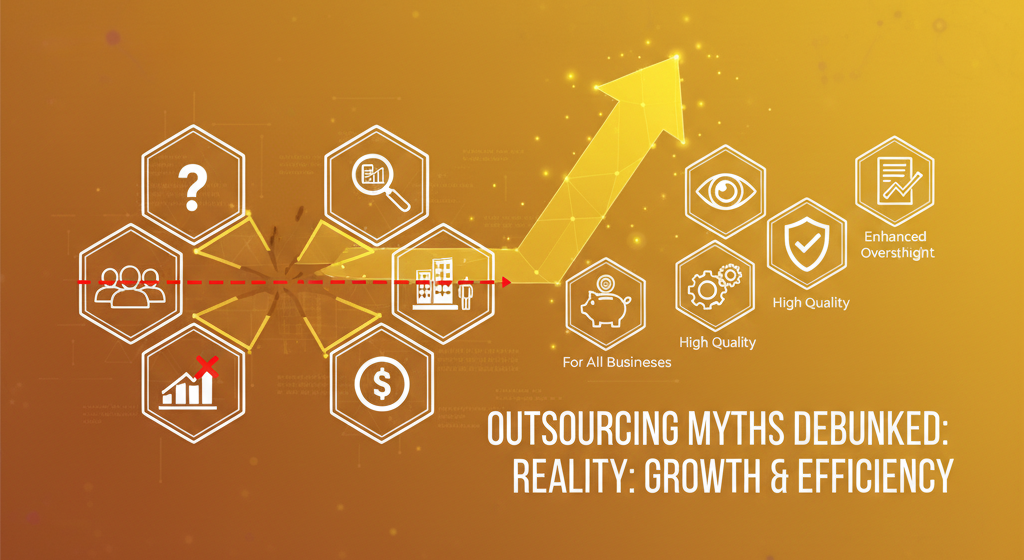
In today’s business world, outsourcing a company’s finance and accounting department has become one of the most advantageous moves. However, despite this, there are still several myths and misconceptions about outsourcing. This blog aims to debunk these myths and shed light on why you should consider outsourcing as well. Myth 1: Outsourcing Means Losing Control Over Financial Operations Reality: Enhanced Oversight and Control Contrary to the belief that outsourcing leads to a loss of control, it provides enhanced oversight and transparency. Reputable outsourcing companies utilize advanced technologies and reporting systems that offer real-time access to financial data. This ensures that businesses can monitor their financial operations closely and make informed decisions based on accurate, up-to-date information. Myth 2: Outsourcing is Only for Large Corporations Reality: Benefits for Businesses of All Sizes While large corporations have long been in the outsourcing game, small and medium-sized enterprises (SMEs) can equally benefit from it, if not more. Outsourcing finance and accounting services allows companies, most especially SMEs, to access expertise and technology that may otherwise be too costly. Outsourcing gives smaller businesses a chance to be on a level playing field with larger companies. Myth 3: Outsourcing Leads to Poor Quality and Errors Reality: High Standards and Accuracy Choosing the right outsourcing company could mean more accurate, higher-standard reports. Finance BPOs employ skilled professionals and use robust quality control processes to maintain high standards. Additionally, outsourcing firms often have specialized teams with deep expertise in various financial functions, leading to improved accuracy and reliability. These professionals are experts in their field and have gained extensive experience working with diverse clients. Myth 4: Outsourcing is Too Expensive Reality: Cost-Effective Solution Outsourcing is often perceived as an expensive option, but it can lead to significant cost savings. By outsourcing, companies can reduce expenses related to hiring, training, and maintaining in-house staff. Additionally, outsourcing eliminates the need to invest in expensive technology and infrastructure, further reducing operational costs. Myth 5: Outsourcing Hinders Business Flexibility Reality: Increased Flexibility and Scalability Outsourcing provides businesses with greater flexibility and scalability. Since you do not need to have a full-time accounting and finance department, you can easily adjust the level of services based on your needs, whether it’s scaling up during peak periods or scaling down during slower times. This flexibility allows businesses to respond quickly to changing market conditions and demands. Conclusion Finance and accounting outsourcing gives businesses more than cost savings—it provides access to specialized expertise, stronger financial controls, scalable support, and secure, accurate reporting. By moving past common outsourcing misconceptions, companies can make informed decisions that improve efficiency, reduce operational pressure, and create more room to focus on growth. Ready to see whether outsourced finance and accounting support is right for your business? Book a call today to discuss your current processes, identify opportunities to improve efficiency, and explore a solution tailored to your goals.
Maximizing Deductions: How an Outsourced CFO Can Help You Save

Tax season can be overwhelming for entrepreneurs, especially when it involves ensuring you are not leaving any money on the table. Amid all the operation management and growth drives, maximizing tax deductions often goes unnoticed. That is when an outsourced Chief Financial Officer steps in-a strategic partner who not only streamlines your financial processes but also unlocks significant tax savings for you. Here’s how an outsourced CFO can help your business maximize deductions and keep more of your hard-earned revenue. 1. Tax Code Expertise The tax code is notoriously complex and constantly changing. An outsourced CFO brings a deep understanding of the tax laws relevant to your business. They stay updated on new regulations and identify overlooked deductions, credits, and incentives that can significantly lower your tax liability. From R&D credits to depreciation schedules, they ensure no savings opportunity slips through the cracks. 2. Strategic Cost Categorization Accurate expense categorization is essential for claiming deductions. Many businesses miss out on potential savings due to poorly categorized expenses or incomplete records. An outsourced CFO will look through and organize your financial information, ensuring that the costs are properly categorized and are thus eligible for deduction. Be it travel, employee benefits, or marketing costs, they know how to classify them for maximum tax savings. 3. Year-Round Tax Planning Maximizing deductions is not a task reserved for tax season. It is a year-round effort. An outsourced CFO works with you to implement proactive tax strategies throughout the year. By analyzing your financials in real time, you can make informed decisions, such as timing large purchases, optimizing depreciation, or leveraging tax-advantaged accounts. They can also coordinate with your business tax services to help you capitalize on savings opportunities before year-end. 4. Identifying Industry-Specific Deductions Every industry has unique tax advantages, and an outsourced CFO knows how to tap into them. For example: Manufacturing businesses can benefit from production-based deductions. Tech startups may qualify for research and development (R&D) tax credits. Real estate firms can leverage cost segregation studies to accelerate depreciation. By understanding the nuances of your industry, an outsourced CFO ensures you’re taking advantage of every relevant deduction. 5. Enhanced Record-Keeping and Audit Readiness Good record-keeping is the backbone of maximizing deductions. An outsourced CFO institutes strong financial systems to monitor and maintain all documentation, including receipts and invoices. Paired with professional bookkeeping services, this provides confidence in claiming your deductions and ensures you are audit-ready should the IRS come knocking. 6. Comprehensive Financial Strategy Tax savings are only one piece of the puzzle. An outsourced CFO integrates tax planning into your broader financial strategy, aligning it with cash flow management, profitability goals, and growth initiatives. By understanding the full scope of your business, they help you save on taxes while fostering long-term financial health. So, why outsource CFO? Small and mid-sized businesses are usually apprehensive about hiring a full-time CFO due to cost considerations. With the outsourcing option, they gain access to high-level expertise at a fraction of the cost. With an outsourced CFO, you get to experience tailored strategies, personalized insights, and dedicated support without the overhead of a full-time employee. The Bottom Line Maximizing deductions is about more than reducing expenses—it’s about making strategic financial decisions that protect cash flow, support growth, and keep your business compliant. An outsourced CFO helps you identify overlooked tax-saving opportunities, organize your financial data, and build a proactive tax strategy around your business goals. With experienced financial guidance, you can make confident decisions throughout the year instead of scrambling to minimize your tax bill at filing time. Book a free CFO consultation today to find out where your business may be leaving money on the table. We’ll discuss your current financial setup, potential deduction opportunities, and practical next steps to improve profitability and tax efficiency.
Year-End Close Lessons from 2025: What Small Businesses Must Fix in 2026

Why Your 2025 Close Matters More Than You Think Facing 2025’s closing, plenty of small firms pulled extra hours, scrambling to fix records at the eleventh hour. While the books may now be closed, the problems uncovered during the process should not be ignored. If you’re being honest, the year-end close probably wasn’t as smooth as you wanted it to be. Reconciling things might have taken longer than expected. Reports may have needed more than one try to match up properly. Or maybe you found yourself answering the same questions over and over, wishing the numbers were clearer—and ready sooner. That’s normal. Small businesses operate with limited time, lean teams, and competing priorities. But January 2026 is the perfect moment to pause and ask a simple question: What did the 2025 close teach us—and what do we need to do differently this year? This time around, maybe choices should shift a bit. What worked then might not hold now. Lesson 1: Manual Processes Are No Longer Sustainable Most people know how spreadsheets work. Getting approval by email appears fast at first. Manual journal entries seem manageable—until they’re not. Fumbling through spreadsheets at year’s end exposed shaky workflows in countless small offices. One calculation was overlooked. Another file is mislabeled. Time vanished, soaked up by backtracking and rechecking what ought to have taken minutes. On their own, none of these jobs seems like much. All together, they drag each step behind. What to fix in 2026: Starting fresh doesn’t mean tossing everything out right away. It’s about adding structure. Clear, concise checklists. Imagine step-by-step guides for wrapping up tasks. Templates that stay the same across teams. Steps are repeated each time without skipping any. At this point, some companies bring in outside help with bookkeeping, not because they’re overwhelmed, but rather to clear clutter and stop leaning so much on last-minute corrections. Lesson 2: Reconciliations Were Left Too Late Facing unreconciled balances turned into a widespread challenge by late 2025. Bank records didn’t match up, nor did customers’ and vendor ledgers. Payroll obligations slipped through the cracks, while internal transfers between companies remained unsettled. Matching these pieces became harder than expected. Waiting till December means trouble piles up fast for small shops. Messy records show up when checks happen too late. Tiny errors grow big without regular reviews. Cash flow surprises hit harder at closing time. Owners feel the heat of catching up on large unexplained variances all at once, increased risk of material errors, and time-consuming cleanup during audits or tax preparation. What to fix in 2026: Reconciliations shouldn’t be a year-end event. They should be routine. Monthly. Predictable. When reconciliations are handled consistently throughout the year—often with help from a finance BPO—issues are smaller, easier to explain, and far less stressful to resolve. Lesson 3: Limited View of Financial Information What stood out in the 2025 close wasn’t mistakes, but clarity took center stage. Curious minds among company leaders started wondering: “Which numbers can we rely on right now?” “Why did this report change from last month?” “Can we confidently use this for planning?” When financials arrive late—or require extensive explanation, they lose their power. What to fix in 2026: Small businesses should aim for faster closes and clearer reporting. Outsourced finance teams can provide accurate month-end financials, customized management reports, and insights that go beyond basic bookkeeping. Lesson 4: Compliance Followed Problems Small companies usually face chaos when rules catch up at year’s end. In 2025, many teams rushed to gather supporting documents for auditors, tax advisors, or lenders—only to find gaps in approvals or missing records. This reactive approach increases: Audit risk Tax filing delays Dependence on last-minute adjustments What to fix in 2026: Start the year by moving past quick fixes toward steady habits. Small safeguards make a difference. Papers stay in order because someone always knows what belongs where. When finance teams handle outside processes, they keep records ready for checks at any moment. That way, December does not turn into chaos just before deadlines. Lesson 5: Finance Teams Were Overstretched Small businesses typically operate with lean finance teams. During the 2025 year-end close, many owners and finance managers found themselves juggling: Close activities Tax preparation Day-to-day operations This often led to burnout and an increased risk of errors. What to fix in 2026: Outsourcing isn’t about replacing your team. It’s about supporting them. Offloading routine close activities allows internal staff to focus on higher-value work—planning, analysis, and running the business—without stretching themselves thin at year-end. Turning 2025 Lessons into a Better 2026 If your 2025 year-end close felt rushed, disorganized, or overly manual, now is the time to improve the process before the same issues return. The challenges from last year’s close offer a valuable lesson for small businesses: working longer hours is not the solution. A smarter, more structured approach to finance can reduce pressure on your team, improve reporting, and support better business decisions throughout the year. By partnering with a finance and accounting BPO, your business can: Accelerate month-end and year-end close processes Improve the accuracy of financial records and support compliance requirements Gain clearer, more timely visibility into cash flow and business performance Scale finance operations without increasing in-house headcount Reduce manual work and prevent last-minute reporting bottlenecks January 2026 is the right time to turn your 2025 close challenges into meaningful operational improvements. Waiting until the end of the year increases the risk of recurring delays, reconciliation issues, and reporting pressure. With a structured close process and support from experienced outsourced accounting professionals, finance can become a strategic advantage instead of a year-end burden. Book a call with our finance and accounting team today to review your current close process, identify areas for improvement, and create a practical plan for faster, more accurate financial reporting.