
Bookkeeping vs. Accounting: The Ultimate Guide for business
There’s a moment most business owners face. You’ve spent months, maybe years, building your business, and things are going well: customers are coming in, the product works, people like what you’re doing. Then someone asks a simple question: “What’s your profit margin looking like?” And you freeze. Not because you don’t care about the numbers. You’re just busy running the business. The invoices, the receipts, the emails you’ve been meaning to sort, bookkeeping has been sitting on your to-do list since March. If this sounds like you, take a breath. You’re in the right place. Understanding the basics of bookkeeping and accounting services isn’t just for finance people; it’s what tells you honestly whether your business is actually working. This guide breaks down bookkeeping vs. accounting, how each function works, and why small businesses often need both. Bookkeeping vs. Accounting: What’s the Difference? Here’s something that often causes confusion: bookkeeping and accounting may sound like the same thing, but they’re actually two different jobs. When comparing bookkeeping vs. accounting, the key difference is that bookkeeping organizes the financial data while accounting helps interpret it. Bookkeeping is the process of recording and organizing a business’s financial transactions. Accounting goes further, summarizing, analyzing, interpreting, and reporting on that financial information. Bookkeeping is the day-to-day recording of financial activity. Every invoice, expense, payment, and transaction needs to be accurately recorded and categorized. It builds the financial records a business relies on. Accounting takes those records and turns them into useful information. It helps answer questions like: What does the data actually tell us? How is the business performing? Where are the risks or opportunities? And what should happen next? Bookkeeping Accounting What it is Recording daily transactions Analyzing and interpreting financial data Frequency Daily/Weekly Monthly/quarterly/annually Examples Invoices, receipts, payroll entries Tax planning, financial statements, forecasting Who does it Bookkeeper/Accounting Professional Accountant/controller/CPA, depending on the work Think of it this way: bookkeeping is like grocery shopping. Accounting takes those groceries and turns them into a meal; bookkeeping provides the information; accounting helps you use it. You generally need both functions. Great analysis built on messy records is just guessing with extra steps, while clean records with no analysis only show you what happened, not what to do next. Why You Can’t Really Get Away With Just One A lot of small businesses start working with one side of the process. They may hire a bookkeeper and skip the accounting side, or they handle the bookkeeping themselves and call an accountant only at tax time. Both roles matter, and the quality of one directly affects the other. If your books are inaccurate or disorganized, your accountant is working with unreliable information, which affects both the advice you get and the accuracy of your tax filings. On the other hand, simply keeping your books up to date isn’t enough on its own. Without someone analyzing what the numbers actually mean, you could look profitable on paper while struggling with cash flow. That happens more often than most business owners realize. Cash flow is one of the most common challenges facing small businesses. SCORE cites research indicating that cash-flow problems play a role in 82% of small-business failures. It doesn’t mean that cash flow is always the sole reason, but it is almost always part of it. That is why accurate bookkeeping needs financial analysis. Clean records show what happened; analysis helps you understand what the numbers mean and what’s coming next. Signs You Need Professional Bookkeeping and Accounting Services Don’t wait until things fall apart to bring in support. A few signs it’s time: Finding your net profit from last month takes 20 minutes of digging Your business and personal expenses are in the same bank account Every tax season feels like an emergency You’re spending hours a week on data entry a system could do in minutes Your financial statements are either ignored entirely or don’t give you any real clarity If several of these sound familiar, it may be time to bring in professional support rather than continuing to manage the finance function yourself. Common Mistakes Small Business Owners Make Mixing personal and business money. It seems convenient at first, but blending your accounts makes tax prep a nightmare and leaves you guessing about actual profits. Focusing on profit instead of cash flow. You can be completely profitable on paper and still run out of cash to cover payroll next Friday. Clinging to outdated spreadsheets. Manual systems work fine when you’re starting out, but as transaction volume grows, those same spreadsheets become a real operational liability. Treating taxes as a once-a-year surprise. Waiting until April to look at your tax liability leads to frantic receipt hunting, missed tax-saving strategies, and surprise bills. How to Choose the Right Bookkeeping and Accounting Services Provider A few things matter more than others when you’re ready to bring someone in: They’ve worked with businesses your size, in your industry Their pricing and scope of work are clearly explained before the engagement begins. You have timely access to your financial information rather than waiting for reports without visibility into the underlying data. They explain things in plain language; if every conversation leaves you more confused, that’s not the right fit Ideally, your provider can continue supporting the business as its needs become more complex, including controller, forecasting, or fractional CFO support when appropriate. Frequently Asked Questions What’s the difference between bookkeeping vs. accounting? Bookkeeping focuses on recording and organizing financial transactions, while accounting focuses on analyzing, interpreting, and reporting financial information. Do small businesses need both bookkeeping and accounting? Yes. Bookkeeping can provide clean, organized records, but without analysis, business owners may still lack the insight needed to make informed decisions. On the other hand, when a company does accounting without solid bookkeeping, the accountant is working with unreliable data. They depend on each other. When should a small business hire a bookkeeper or accountant? You may want professional support if several of these signs are familiar: Not knowing
Crypto Accounting for Businesses: A Practical Guide

Crypto is no longer just a future idea. It’s becoming part of everyday business. Companies now use digital currencies to get paid by international clients, work with international contractors, or hold crypto as an asset. Crypto accounting for businesses is becoming more important as companies begin using digital assets in everyday transactions. While crypto can make transactions faster and easier, it also creates new accounting challenges. How can businesses keep their books accurate, organized, and compliant while managing digital assets? If your company uses cryptocurrency, here are five practical steps for keeping your crypto accounting and bookkeeping organized under current U.S. rules. Crypto Accounting for Businesses: Five Practical Steps Step 1: Separate Your Business and Personal Crypto Wallets Before starting any crypto transactions, companies really need to organize their wallets first. Most importantly, never mix business and personal crypto. It’s also good practice to separate wallets used for daily operations from crypto held as long-term assets. If you keep everything in one wallet, it can become difficult to understand the purpose of each transaction. There is a common mistake that occurs most often which is that many business owners open the exchange account under their own name and personal tax ID, then use it for company funds. The wallet may look like a business wallet, but on paper the activity belongs to the owner, not the company. Open exchange accounts in the legal name of the entity, using the company EIN, and keep the login under company control. Separating your crypto wallets makes reconciliation, tax preparation, and financial reporting much easier. Step 2: Record Fair Market Value and Apply GAAP Correctly When a company receives cryptocurrency, it is not enough to just record the number of tokens, such as “1 ETH” or “0.5 BTC.” The company should also record its fair market value in U.S. dollars at the time of the transaction. For example, if a client pays 1 ETH worth $3,000, the company should record the payment at its U.S. dollar value. That $3,000 becomes the starting tax value, or cost basis, of the ETH. Recording it makes it easier to calculate the gain or loss when the crypto is later sold or used. If you do not record the value on the day you receive it, you lose the number which you are going to need when you sell or spend the coin. When a company holds the crypto, qualifying crypto assets under FASB ASU 2023-08 are measured at fair value at each reporting period. This matters because changes in qualifying crypto asset values affect net income and the company’s financial results. Two limits are worth knowing here. First, this rule applies to companies that prepare GAAP financial statements. Many owner-operated businesses report on a tax basis or cash basis and never produce GAAP statements at all, so this measurement rule may not touch their books. Second, not every digital asset qualifies. Assets that give the holder a claim on something else, such as many stable coins, along with NFTs and any token the company itself issued, fall outside the scope and stay under the older cost-less-impairment model. Step 3: Track Crypto Cost Basis and Taxes The IRS treats cryptocurrency as property. Therefore, businesses need to track the cost basis and crypto’s value when they sell, exchange, or use it. For crypto accounting for businesses, keeping accurate cost-basis records is especially important for tax reporting. When a business sells crypto, exchanges it for another digital asset, or uses it to pay an expense, the transaction may create a taxable gain or loss. Gain or Loss = Amount Realized − Adjusted Tax Basis The business compares the amount received from the sale or use of the crypto with its adjusted tax basis. Companies should maintain accurate records of the acquisition date, original value, transaction fees, and the date the crypto was sold or otherwise disposed of. Paying contractors in crypto creates two events When paying employees or contractors in cryptocurrency, companies still need to follow the requirements of normal payroll and tax reporting. Companies report the payment at its fair market value on the payment date, just like a cash payment. What gets missed is the second half. Spending crypto is a disposition. If you bought 1 ETH at $2,000 and later pay a contractor with it when it is worth $3,000, you report the $3,000 payment on the contractor’s Form 1099-NEC and you also recognize a $1,000 gain on your own return. The bill for that gain is real, and it arrives whether or not any cash moved. Wash sales do not currently apply to crypto The wash-sale rule stops investors from selling a stock at a loss and buying it back within 30 days. The IRS wrote that rule for stocks and securities. Because the IRS treats crypto as property, it does not currently apply the same way to digital assets. Congress has proposed closing this gap more than once, so treat it as a current position rather than a permanent one, and confirm it before relying on it in a given tax year. Step 4: Reconcile Crypto Every Month Perform a monthly crypto reconciliation, just like a bank reconciliation. This helps you categorize every transaction correctly. Every month, you need to reconcile your accounting records with wallet balances, exchange statements, and blockchain activity. If the company transfers crypto between its wallets, do not record the transfer as revenue or an expense. Also review transaction fees, customer payments, purchases, and realized gains or losses. Step 5: Use Crypto Accounting Software Because of the increase in transaction volume, managing everything manually can become difficult. Therefore, using crypto accounting software can help companies organize transactions, track cost basis, reconcile wallets, and connect crypto activity with their accounting system. The aim is to create a clear audit trail that makes monthly bookkeeping, financial reporting, and tax preparation easier. Frequently Asked Questions How do I record crypto received as payment? Record the revenue at the fair market value in U.S.
The Q1 Financial Checkup Every Small Business Should Do

Three months in, you have real data — not projections, not hope. Here’s how to use it. A client came to us last April convinced their business was doing fine. Revenue “seemed okay,” expenses felt normal, and they hadn’t looked at the books since January. By the time we pulled everything together, they’d missed a window to catch a cash shortfall early, one that a simple Q1 review would have flagged in February. This is more common than most business owners realize. The first quarter ends quietly, and most people are too busy running the business to stop and look at how it’s actually doing. But that first look, when you’ve got three full months of real numbers, is one of the most valuable financial moments of the year. Here are the five areas worth reviewing right now: 1. Revenue: Is the year actually starting the way you planned? Pull your Q1 revenue and put it next to your original forecast. Not to judge yourself — but to understand what’s true. Is revenue tracking ahead, behind, or roughly on pace? Are sales growing month over month, or did January outperform and March slow down? If you’re behind, March is the right time to adjust, not June. A small gap in Q1 is manageable. The same gap ignored through Q2 is a problem. 2. Expenses: What’s actually eating into your margin? Expenses have a way of expanding without anyone noticing. The first quarter tends to pile on costs: annual renewals, new hires, early-year vendor price increases. Scan through your spending by category and ask: Does this match what I budgeted? Is anything higher than expected? Common things we spot in Q1 reviews: software subscriptions nobody’s using, marketing spend that quietly doubled, payroll costs higher than projected because of timing. None of these are emergencies on their own, but catching them now gives you 9 months to adjust. 3. Cash Flow: Profit doesn’t pay the bills, cash does A profitable business can still run into serious trouble if cash isn’t moving through fast enough. Look at your current bank balances, what’s outstanding from customers, and any large payments coming up in Q2. If you’re noticing that customers are paying slower than last year, that’s worth addressing now. Tightening up your invoicing process or revisiting payment terms in March has a compounding benefit for the rest of the year. Wait until fall, and you’re just managing symptoms. 4. Your Balance Sheet: The story behind the story Most business owners live in their P&L and barely glance at the balance sheet. That’s understandable, but it means they’re often missing what’s building beneath the surface. Take a few minutes to look at your loan balances, inventory levels, and overall equity. Is your financial position getting stronger or weaker compared to where you were at the start of the year? These numbers give you a clearer picture of the business’s actual health, not just its recent activity. 5. Your Forecast: Update it while it still matters Your January projections were based on assumptions. Now you have data. Use it. Updating your forecast in March, by adjusting for what Q1 actually showed, helps you make better decisions about hiring, spending, and growth for the rest of the year. It also means you’re not operating on stale assumptions when Q3 planning comes around. Why This Is Worth 30 Minutes of Your Time A Q1 financial checkup isn’t about perfect numbers or finding every possible issue. It’s about knowing where your business stands early enough to make informed decisions. Businesses that review their financials regularly—even with a brief quarterly review—can respond faster, plan with more confidence, and avoid unpleasant surprises at year-end. Those that wait until December to review January’s performance often uncover missed opportunities or issues that could have been addressed months earlier. Not sure what your Q1 numbers are telling you? Or are your books not yet ready for a meaningful review? Book a call with our team today. We’ll review where your finances stand, identify what needs attention, and help you create a clearer path for the rest of the year.
Overcoming Common Myths About Finance and Accounting Outsourcing
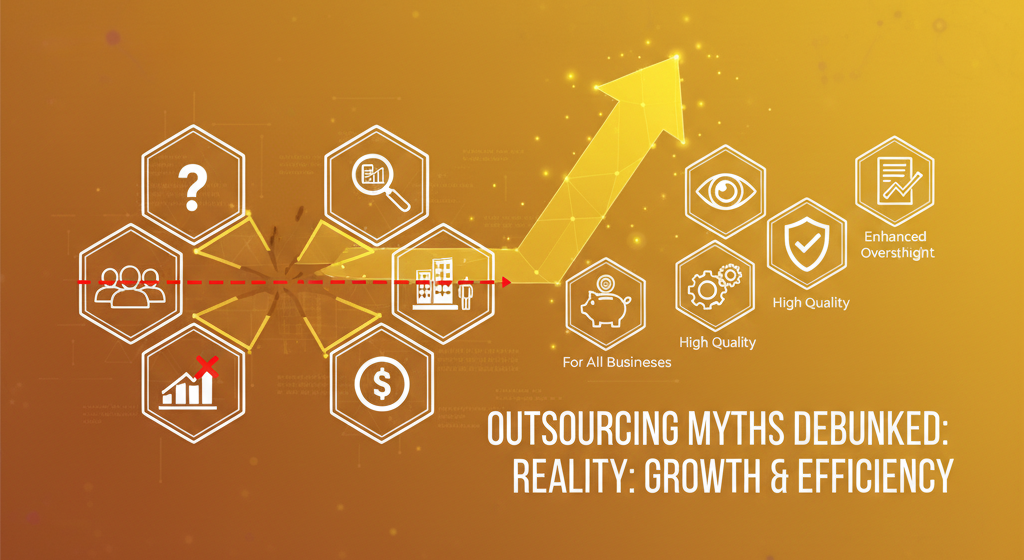
In today’s business world, outsourcing a company’s finance and accounting department has become one of the most advantageous moves. However, despite this, there are still several myths and misconceptions about outsourcing. This blog aims to debunk these myths and shed light on why you should consider outsourcing as well. Myth 1: Outsourcing Means Losing Control Over Financial Operations Reality: Enhanced Oversight and Control Contrary to the belief that outsourcing leads to a loss of control, it provides enhanced oversight and transparency. Reputable outsourcing companies utilize advanced technologies and reporting systems that offer real-time access to financial data. This ensures that businesses can monitor their financial operations closely and make informed decisions based on accurate, up-to-date information. Myth 2: Outsourcing is Only for Large Corporations Reality: Benefits for Businesses of All Sizes While large corporations have long been in the outsourcing game, small and medium-sized enterprises (SMEs) can equally benefit from it, if not more. Outsourcing finance and accounting services allows companies, most especially SMEs, to access expertise and technology that may otherwise be too costly. Outsourcing gives smaller businesses a chance to be on a level playing field with larger companies. Myth 3: Outsourcing Leads to Poor Quality and Errors Reality: High Standards and Accuracy Choosing the right outsourcing company could mean more accurate, higher-standard reports. Finance BPOs employ skilled professionals and use robust quality control processes to maintain high standards. Additionally, outsourcing firms often have specialized teams with deep expertise in various financial functions, leading to improved accuracy and reliability. These professionals are experts in their field and have gained extensive experience working with diverse clients. Myth 4: Outsourcing is Too Expensive Reality: Cost-Effective Solution Outsourcing is often perceived as an expensive option, but it can lead to significant cost savings. By outsourcing, companies can reduce expenses related to hiring, training, and maintaining in-house staff. Additionally, outsourcing eliminates the need to invest in expensive technology and infrastructure, further reducing operational costs. Myth 5: Outsourcing Hinders Business Flexibility Reality: Increased Flexibility and Scalability Outsourcing provides businesses with greater flexibility and scalability. Since you do not need to have a full-time accounting and finance department, you can easily adjust the level of services based on your needs, whether it’s scaling up during peak periods or scaling down during slower times. This flexibility allows businesses to respond quickly to changing market conditions and demands. Conclusion Finance and accounting outsourcing gives businesses more than cost savings—it provides access to specialized expertise, stronger financial controls, scalable support, and secure, accurate reporting. By moving past common outsourcing misconceptions, companies can make informed decisions that improve efficiency, reduce operational pressure, and create more room to focus on growth. Ready to see whether outsourced finance and accounting support is right for your business? Book a call today to discuss your current processes, identify opportunities to improve efficiency, and explore a solution tailored to your goals.