
Overcoming Common Myths About Finance and Accounting Outsourcing
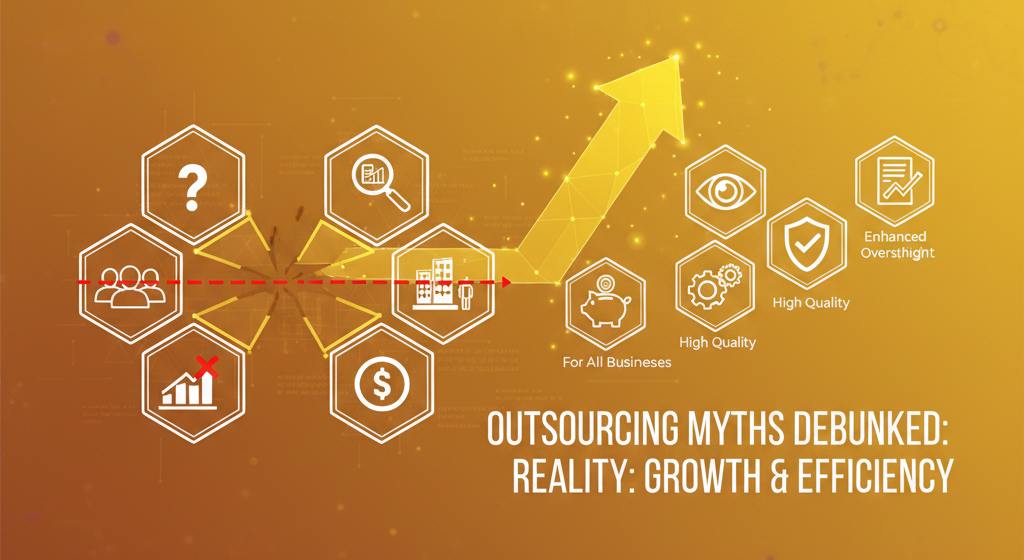
In today’s business world, outsourcing a company’s finance and accounting department has become one of the most advantageous moves. However, despite this, there are still several myths and misconceptions about outsourcing. This blog aims to debunk these myths and shed light on why you should consider outsourcing as well. Myth 1: Outsourcing Means Losing Control Over Financial Operations Reality: Enhanced Oversight and Control Contrary to the belief that outsourcing leads to a loss of control, it provides enhanced oversight and transparency. Reputable outsourcing companies utilize advanced technologies and reporting systems that offer real-time access to financial data. This ensures that businesses can monitor their financial operations closely and make informed decisions based on accurate, up-to-date information. Myth 2: Outsourcing is Only for Large Corporations Reality: Benefits for Businesses of All Sizes While large corporations have long been in the outsourcing game, small and medium-sized enterprises (SMEs) can equally benefit from it, if not more. Outsourcing finance and accounting services allows companies, most especially SMEs, to access expertise and technology that may otherwise be too costly. Outsourcing gives smaller businesses a chance to be on a level playing field with larger companies. Myth 3: Outsourcing Leads to Poor Quality and Errors Reality: High Standards and Accuracy Choosing the right outsourcing company could mean more accurate, higher-standard reports. Finance BPOs employ skilled professionals and use robust quality control processes to maintain high standards. Additionally, outsourcing firms often have specialized teams with deep expertise in various financial functions, leading to improved accuracy and reliability. These professionals are experts in their field and have gained extensive experience working with diverse clients. Myth 4: Outsourcing is Too Expensive Reality: Cost-Effective Solution Outsourcing is often perceived as an expensive option, but it can lead to significant cost savings. By outsourcing, companies can reduce expenses related to hiring, training, and maintaining in-house staff. Additionally, outsourcing eliminates the need to invest in expensive technology and infrastructure, further reducing operational costs. Myth 5: Outsourcing Hinders Business Flexibility Reality: Increased Flexibility and Scalability Outsourcing provides businesses with greater flexibility and scalability. Since you do not need to have a full-time accounting and finance department, you can easily adjust the level of services based on your needs, whether it’s scaling up during peak periods or scaling down during slower times. This flexibility allows businesses to respond quickly to changing market conditions and demands. Conclusion Finance and accounting outsourcing gives businesses more than cost savings—it provides access to specialized expertise, stronger financial controls, scalable support, and secure, accurate reporting. By moving past common outsourcing misconceptions, companies can make informed decisions that improve efficiency, reduce operational pressure, and create more room to focus on growth. Ready to see whether outsourced finance and accounting support is right for your business? Book a call today to discuss your current processes, identify opportunities to improve efficiency, and explore a solution tailored to your goals.
Maximizing Deductions: How an Outsourced CFO Can Help You Save

Tax season can be overwhelming for entrepreneurs, especially when it involves ensuring you are not leaving any money on the table. Amid all the operation management and growth drives, maximizing tax deductions often goes unnoticed. That is when an outsourced Chief Financial Officer steps in-a strategic partner who not only streamlines your financial processes but also unlocks significant tax savings for you. Here’s how an outsourced CFO can help your business maximize deductions and keep more of your hard-earned revenue. 1. Tax Code Expertise The tax code is notoriously complex and constantly changing. An outsourced CFO brings a deep understanding of the tax laws relevant to your business. They stay updated on new regulations and identify overlooked deductions, credits, and incentives that can significantly lower your tax liability. From R&D credits to depreciation schedules, they ensure no savings opportunity slips through the cracks. 2. Strategic Cost Categorization Accurate expense categorization is essential for claiming deductions. Many businesses miss out on potential savings due to poorly categorized expenses or incomplete records. An outsourced CFO will look through and organize your financial information, ensuring that the costs are properly categorized and are thus eligible for deduction. Be it travel, employee benefits, or marketing costs, they know how to classify them for maximum tax savings. 3. Year-Round Tax Planning Maximizing deductions is not a task reserved for tax season. It is a year-round effort. An outsourced CFO works with you to implement proactive tax strategies throughout the year. By analyzing your financials in real time, you can make informed decisions, such as timing large purchases, optimizing depreciation, or leveraging tax-advantaged accounts. They can also coordinate with your business tax services to help you capitalize on savings opportunities before year-end. 4. Identifying Industry-Specific Deductions Every industry has unique tax advantages, and an outsourced CFO knows how to tap into them. For example: Manufacturing businesses can benefit from production-based deductions. Tech startups may qualify for research and development (R&D) tax credits. Real estate firms can leverage cost segregation studies to accelerate depreciation. By understanding the nuances of your industry, an outsourced CFO ensures you’re taking advantage of every relevant deduction. 5. Enhanced Record-Keeping and Audit Readiness Good record-keeping is the backbone of maximizing deductions. An outsourced CFO institutes strong financial systems to monitor and maintain all documentation, including receipts and invoices. Paired with professional bookkeeping services, this provides confidence in claiming your deductions and ensures you are audit-ready should the IRS come knocking. 6. Comprehensive Financial Strategy Tax savings are only one piece of the puzzle. An outsourced CFO integrates tax planning into your broader financial strategy, aligning it with cash flow management, profitability goals, and growth initiatives. By understanding the full scope of your business, they help you save on taxes while fostering long-term financial health. So, why outsource CFO? Small and mid-sized businesses are usually apprehensive about hiring a full-time CFO due to cost considerations. With the outsourcing option, they gain access to high-level expertise at a fraction of the cost. With an outsourced CFO, you get to experience tailored strategies, personalized insights, and dedicated support without the overhead of a full-time employee. The Bottom Line Maximizing deductions is about more than reducing expenses—it’s about making strategic financial decisions that protect cash flow, support growth, and keep your business compliant. An outsourced CFO helps you identify overlooked tax-saving opportunities, organize your financial data, and build a proactive tax strategy around your business goals. With experienced financial guidance, you can make confident decisions throughout the year instead of scrambling to minimize your tax bill at filing time. Book a free CFO consultation today to find out where your business may be leaving money on the table. We’ll discuss your current financial setup, potential deduction opportunities, and practical next steps to improve profitability and tax efficiency.